
Happy Nordic Living brings European timber construction expertise to Kyiv in support of Ukraine's DBN reform
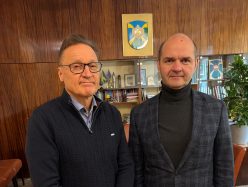
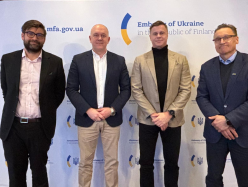
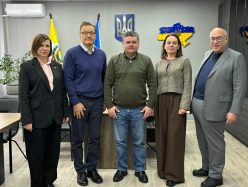
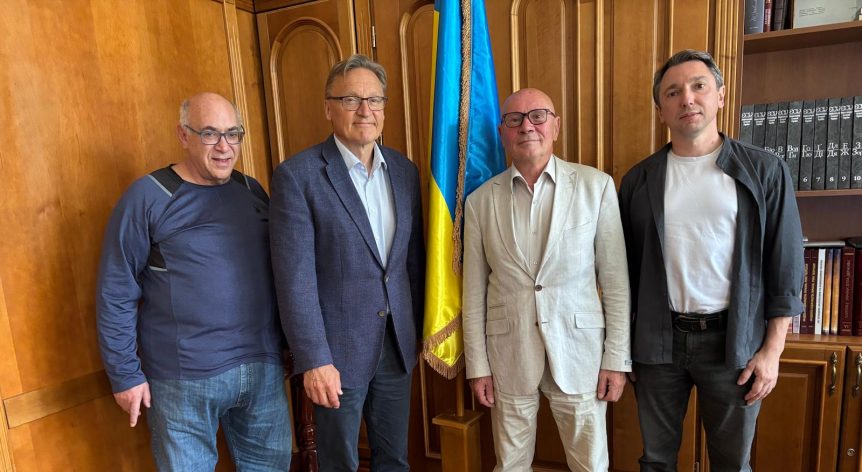
On 9 July 2026, an HNL delegation — Timo Mikkonen (CEO), Glenn Kolleeny (legal counsel) and Andrii Antonenko (construction consultant) — met with Professor Gennadiy Farenyuk, Director of the State Research Institute of Building Constructions (NDIBK) in Kyiv. NDIBK is one of the principal state research institutes responsible for developing Ukraine's national building norms (DBN), with a particular focus on structural and fire safety standards. Its work sits at the heart of Ukraine's building regulatory process — making a direct dialogue with its director a meaningful step in any effort to shape how these norms evolve.
The purpose of our visit was straightforward: to present the views of our Finnish–Swedish–Swiss industry working group on Ukraine's ongoing DBN fire safety reform, and to open a direct technical dialogue at exactly that level.
Professor Farenyuk had studied the technical brief we prepared ahead of the meeting. He received our arguments openly and with genuine interest, and confirmed that NDIBK will review the working group's comments and consider them where they are found suitable for Ukraine's specific conditions and context. We are engaged in this process because we see a real market opportunity in Ukraine for modern, higher timber apartment buildings — and we need the regulatory framework to make that possible. What encourages us is that Ukrainian counterparts want to see Western investors succeed here. The reception we received from Professor Farenyuk reflected exactly that spirit: open, engaged and genuinely interested in finding solutions that work for both sides.
The case we brought
We discussed the current state of the DBN V.1.1-7:202X draft and the broader landscape of competing interests around the reform. Our central argument was simple: with Ukraine now in EU accession negotiations, harmonising building regulations with European standards is the natural direction of travel. Timber structures that have already been tested and certified across Europe — in many cases years ago — should be accepted in Ukraine without redundant retesting. Building permits for European-certified systems should follow without unnecessary friction.
We also raised the internal contradiction in the current draft: the requirement for Class A1 non-combustible materials for certain structural elements sits uneasily alongside the draft's own performance-based approach. Finland, Sweden and Switzerland have all resolved this tension without compromising safety — and we explained how. Professor Farenyuk engaged with these points seriously and constructively.
Empa extends a hand
On behalf of the working group, we also delivered an offer from Empa — the Swiss Federal Laboratories for Materials Science and Technology — to consult with their Ukrainian counterparts on how European fire safety norms can be integrated with Ukraine's own national standards. It is a generous offer from one of Europe's foremost state-level research institutions, and we hope it leads to a lasting connection between Empa and NDIBK.
Looking ahead
When the next version of DBN V.1.1-7:202X is ready, our working group will receive it and have the opportunity to submit further technical comments. We will take that seriously. Progress in regulatory reform rarely comes from a single meeting — it comes from sustained, respectful engagement over time. We left Kyiv encouraged that the right conversations are happening, and committed to continuing them.