
April 14, 2026
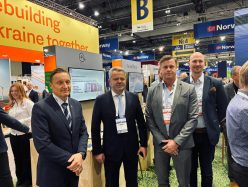
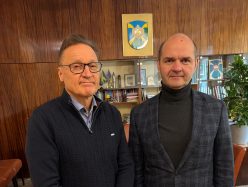
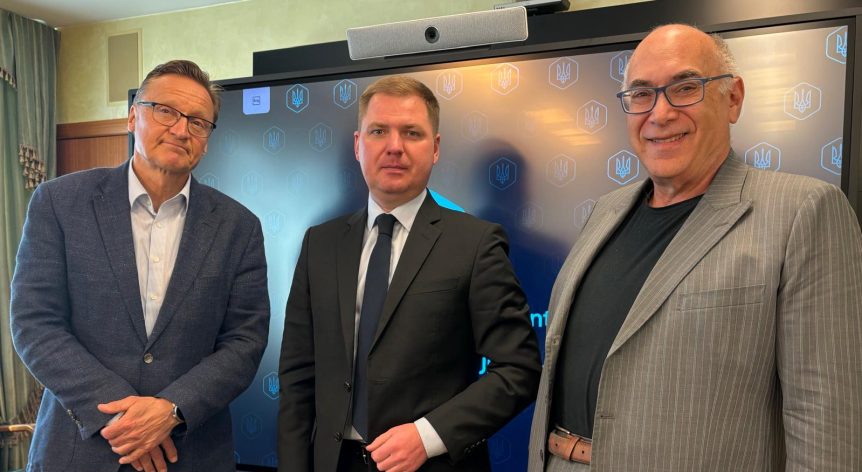
A delegation of Happy Nordic Living Oy (HNL) met in Kyiv with Artem Rybchenko from the Ministry for Development of Communities and Territories of Ukraine to discuss the future of industrial timber construction in Ukraine and the development of the Ukrainian building regulation framework (DBN).
The meeting focused on how Ukraine could gradually align its building approval practices with modern European fire safety and performance-based engineering principles, enabling the safe construction of multi-storey timber buildings.
HNL presented its view that the key challenge is not the technical feasibility of timber construction itself, but the absence of a clear and predictable approval pathway under the current DBN framework.
Towards a Modern, Performance-Based Approval Model
Across Europe, multi-storey timber buildings are already widely constructed in countries such as Finland, Sweden, Switzerland, Austria and Germany.
In these countries, approvals are generally not based on whether a building is made of wood, steel or concrete. Instead, authorities evaluate whether the building meets the required fire safety performance and overall safety criteria.
This performance-based approach forms part of the broader Eurocode-based European construction and approval framework.
How the European Model Works in Practice
Under modern European standards (Eurocodes), the approval process is based on the total fire safety performance of the building.
Safety is achieved through a combination of engineered systems, including:
1. Structural Fire Resistance
The load-bearing timber structures are designed to maintain stability during fire for a required period, typically:
- REI60
- REI90
This is achieved through engineered timber dimensions and scientifically verified fire design methods (Eurocode 5).
2. Encapsulation and Fire Protection
Critical timber structures are protected using fire-resistant layers such as gypsum boards and non-combustible protective systems, delaying ignition and limiting fire spread.
3. Fire Compartmentation
Buildings are divided into fire compartments so that:
- apartments are separated from each other
- staircases are protected
- fire spread between spaces is controlled
4. Evacuation and Smoke Control
Buildings are designed to ensure:
- safe evacuation routes
- smoke management
- controlled emergency access
In some European countries, additional measures such as sprinkler systems are also required in certain types of multi-storey timber buildings as part of the overall fire safety concept.
Material-Neutral Safety Logic
The key principle in Europe is:
“Does the building meet the required safety performance?”
—not:
“What material is the building made from?”
This allows timber construction to be evaluated using the same engineering principles as concrete or steel buildings.
HNL’s Proposal for Ukraine
Happy Nordic Living proposed that Ukraine could gradually introduce a similar approval pathway by:
- allowing performance-based fire engineering approaches
- clarifying how Eurocode-based solutions can be applied within the DBN framework
- developing pilot projects as reference cases
- creating a transparent and scalable approval process for multi-storey timber buildings
The objective would not be to weaken safety requirements, but to modernize the approval logic in line with proven European practice.
These proposed developments would also support the broader objective of gradually harmonising the Ukrainian DBN framework with Eurocode-based European construction standards and approval practices.
Industrial Opportunity for Ukraine
HNL emphasized that enabling modern timber construction would create opportunities for:
- scalable housing production
- faster reconstruction
- industrial investments
- local job creation
- development of local wood value chains
HNL is currently developing a broader industrial housing platform concept for Ukraine, including future local production of prefabricated timber elements and comprehensive residential development concepts (“HNL Village”).
The HNL Village concept combines different forms of residential living within the same coherent community structure, including:
- low-rise single-family houses
- townhouse-style housing
- selected higher multi-storey timber apartment buildings
- and also public buildings like kindergartens, school, health center are included to plan
The objective is to create human-centric, scalable and energy-efficient residential areas aligned with modern Nordic urban planning principles.
The discussions in Kyiv were constructive and represent an important early step towards deeper cooperation between Ukrainian authorities and international industrial actors in the field of sustainable reconstruction.